
Thursday, 23 July 2026
Modern offices are changing fast. Companies no longer want buildings filled with small rooms and narrow hallways. Instead, businesses are looking for flexible workspaces that encourage collaboration, improve productivity, and can easily adapt as teams grow.
That’s one of the biggest reasons why modern steel office building design has become a major trend in commercial construction.
Steel isn’t just about strength anymore. Today, it’s one of the smartest materials available for creating efficient, attractive, and future-ready office spaces.
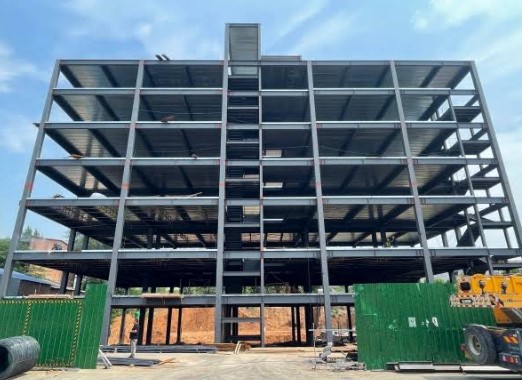
One of the biggest advantages of steel construction is flexibility. Steel frames can span much wider distances than traditional concrete or masonry structures, meaning fewer interior columns are needed. This creates large, open spaces that architects can easily customize for meeting rooms, coworking areas, private offices, or collaborative work zones.
This flexibility is especially valuable because businesses constantly evolve. A company might start with a small team but expand rapidly within a few years. With a steel building, reconfiguring office layouts becomes much easier without requiring major structural changes.
Another reason developers love steel is speed.
Most steel components are manufactured in factories before arriving at the construction site. Since beams, columns, and other structural parts are pre-engineered, installation happens much faster than traditional construction methods. Less time on-site often means lower labor costs and earlier project completion.
Durability is another huge benefit. Steel offers an excellent strength-to-weight ratio, allowing buildings to support heavy loads while reducing foundation requirements. It’s also designed to perform well against strong winds, earthquakes, and other environmental challenges when engineered according to local building standards.
Modern office buildings also prioritize sustainability, and steel fits perfectly into that goal. Many steel structures incorporate advanced insulation systems such as polyurethane or rockwool sandwich panels. These materials help regulate indoor temperatures, reduce energy consumption, and create more comfortable work environments throughout the year. Lower energy usage also translates into reduced operating costs for building owners.
Technology has also transformed how steel buildings are designed.
Today, architects and engineers use Building Information Modeling (BIM) and 3D modeling software to visualize every detail before construction begins. These digital tools help detect design conflicts early, reduce material waste, and improve project coordination between structural, electrical, plumbing, and HVAC systems.
From an aesthetic perspective, steel supports the clean, minimalist look that many companies prefer. Large glass façades, high ceilings, and open interiors create bright, welcoming workplaces filled with natural light. These features don’t just look impressive—they can also improve employee comfort and productivity.
Maintenance is another advantage worth mentioning. Steel structures require relatively little maintenance compared to some traditional materials, making them an attractive long-term investment for commercial property owners.
As businesses continue embracing hybrid work models and collaborative office environments, flexibility has become more valuable than ever. Steel makes it easier to redesign interiors, integrate new technologies, and accommodate changing workplace needs without expensive renovations.
In the end, choosing a modern steel office building isn’t only about constructing a durable structure. It’s about investing in a workspace that’s efficient, adaptable, energy-conscious, and built for the future.
For companies planning their next office development, steel isn’t simply a construction material—it’s a smart business decision.