
Saturday, 08 August 2026
Wallpaper can completely change the look of a room without requiring a major renovation. A plain wall can suddenly become more attractive with the right pattern, texture, or color. The good news is that you do not always need a professional installer to get a decent result. With some patience and the right preparation, you can install wallpaper yourself.
The first step is preparing the wall. Do not immediately start applying wallpaper as soon as you open the package. Check the wall first. It should be clean, dry, smooth, and free from dust, holes, or major imperfections. If there are cracks or small holes, repair them before installation. A smooth surface will make the final wallpaper look much better.
Next, measure the wall and prepare your wallpaper panels.
Measure the height of the wall and cut the wallpaper with some extra material at the top and bottom. Having a little extra gives you room to make adjustments during installation. If your wallpaper has a repeating pattern, pay attention to the pattern when cutting each panel.
Now comes the part that requires patience: positioning the first panel.
The first strip is extremely important because it becomes the reference point for the rest of the wall. Use a level to create a straight vertical guideline. Do not simply follow the corner of the wall because walls are not always perfectly straight.
Depending on the type of wallpaper, you may need to apply adhesive to the wall or directly to the wallpaper. Follow the manufacturer’s instructions for the particular product you are using.
Once the adhesive is ready, carefully position the wallpaper at the top of the wall. Slowly work your way downward. Avoid rushing because small mistakes can become more noticeable as you continue.
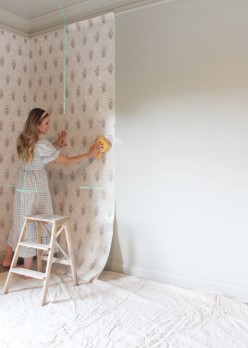
Use a wallpaper smoothing tool or similar flat tool to remove air bubbles and wrinkles. Work from the center toward the edges so trapped air can escape. If you notice a small bubble, gently smooth it out instead of pressing too aggressively.
When you reach the bottom, use a sharp utility knife to trim the excess wallpaper. Take your time with this step. A clean cut around the floor, ceiling, windows, and corners can make a big difference to the finished appearance.
For the next panel, line up the wallpaper carefully with the previous piece. This is especially important when working with patterned wallpaper. The design should connect naturally rather than creating an obvious break.
Corners and electrical outlets require extra attention. Measure carefully and make small cuts rather than removing too much wallpaper at once. It is always easier to make a slightly larger cut later than to fix a piece that has been cut too short.
Finally, step back and inspect the entire wall. Look for bubbles, loose edges, uneven seams, or areas that need additional smoothing.
Installing wallpaper yourself may sound complicated at first, but the basic process is quite straightforward: prepare the wall, measure carefully, position the first panel correctly, smooth the wallpaper, and trim the edges neatly.
The biggest secret is simply not rushing. Take your time, double-check your measurements, and let each panel sit properly. With a little practice, you can give your room a fresh new look without calling a professional.