
Thursday, 08 October 2026
A beautiful house is great, but everything starts from what you cannot easily see: the foundation. The foundation carries the weight of the building and transfers that load safely into the ground. That is why foundation planning should never be treated as a minor part of home construction.
So, how can you make a strong home foundation?
Start by Understanding the Soil
The condition of the soil is one of the most important things to consider. Hard and stable soil can support different foundation options compared with soft soil, slopes, or land that was previously used as fill.
For a simple one-story house built on hard soil, a stone foundation may be sufficient. Meanwhile, a two-story house may require a combination of a stone foundation and footings. If the soil is soft or the property is located on a slope, it is better to consult a structural engineer or architect before construction begins.
Choose the Right Foundation Type
There is no single foundation type that works for every house. The choice depends on the soil, building size, number of floors, and structural loads.
One option mentioned by ASIACON is a stone foundation using river stones bonded with cement and sand. Another option is reinforced concrete, which uses cement, sand, and gravel together with steel reinforcement inside the concrete. The reinforcement helps strengthen the foundation and allows it to handle structural loads.
Use Quality Materials
Strong foundations also depend on proper materials. Cement, sand, gravel, stones, and reinforcing steel should be selected and used according to the structural design. Simply using more material does not automatically make a foundation safer.
The mixture also needs to be prepared properly. Poor proportions, weak materials, or improper installation can reduce the strength of the foundation.
Prepare the Ground Properly
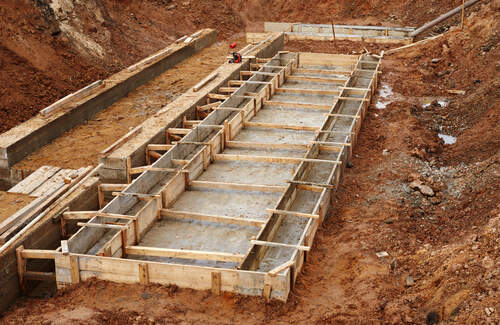
Before the foundation is constructed, the ground needs to be prepared carefully. Excavation should follow the planned dimensions, and the base should be properly prepared and compacted.
ASIACON also describes the use of plastic sheeting in the excavation, followed by a layer of gravel that is compacted before constructing the stone or other foundation.
Do Not Ignore Professional Advice
This is probably the most important point. Foundation work is not the best place to simply guess or copy what another house has done. A foundation that works for a one-story house on hard soil may not be suitable for a three-story house on soft ground.
An architect or structural engineer can help determine the appropriate foundation based on the actual site conditions and building requirements.
A strong home is built from the ground up. So, before thinking about wall colors, doors, or fancy interiors, make sure the foundation has been properly planned. It may not be the most visible part of the house, but it is one of the most important.