
Monday, 24 August 2026
Buildings are not only about impressive designs and beautiful interiors. Today, architecture is also becoming more focused on sustainability. Around the world, architects are creating buildings that use less energy, manage water more efficiently, support biodiversity, and make better use of renewable resources.
Here are six eco-friendly buildings that show how modern architecture can be both attractive and environmentally conscious.
Bosco Verticale – Milan, Italy
Bosco Verticale, or “Vertical Forest,” is one of the most recognizable examples of green architecture. Located in Milan, the project consists of two residential towers covered with thousands of trees and shrubs.
The vegetation does more than make the buildings look like a forest in the middle of the city. It can help reduce pollution, provide natural insulation, and create habitats for insects and other forms of urban biodiversity.
Shanghai Tower – China
Shanghai Tower proves that a huge skyscraper can also take sustainability seriously. Completed in 2015, the tower incorporates more than 40 sustainable technologies.
Its green features include renewable energy systems, landscaping designed to help cool the building, and a spiralling parapet that collects rainwater. It is a good example of how environmental ideas can be integrated into large-scale urban development.
Torre Reforma – Mexico City
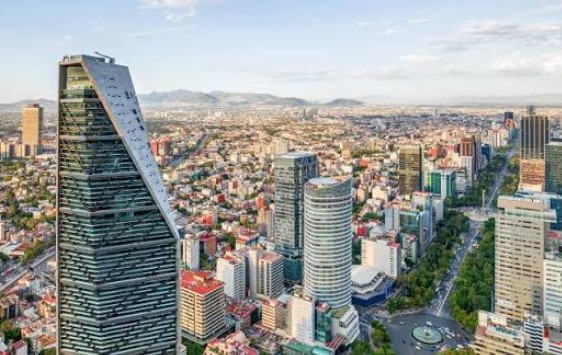
Torre Reforma is another impressive example of sustainable high-rise architecture. Located in Mexico City, the building includes various energy-saving features and is designed to reduce water consumption.
Another interesting detail is that more than 80 percent of its materials were sourced regionally, according to Man of Many. This shows that sustainability is not only about energy but can also involve material choices and local resources.
Vancouver Convention Centre – Canada
The Vancouver Convention Centre takes the idea of a green roof to another level. Its roof covers more than six acres and contains thousands of plants and grasses.
The building also recycles water from its treatment system to help maintain the rooftop garden. The result is a large public building that combines useful facilities with green space.
Museum of Tomorrow – Brazil
Located in Rio de Janeiro, the Museum of Tomorrow has an innovative approach to sustainability. One of its standout features is its moving solar panels, which are designed to follow the sun and maximize solar energy.
The building also collects rainwater and reuses it through its air-conditioning system.
CopenHill – Denmark
CopenHill in Copenhagen takes sustainability in a completely different direction. It is a waste-to-energy facility designed to turn waste into energy, while its roof has been transformed into an outdoor ski slope.
It is a great reminder that eco-friendly architecture does not have to look boring. A building can provide an important environmental function while also becoming an interesting public attraction.
These six buildings show that sustainable architecture can come in many forms. From vertical forests and solar panels to recycled water and waste-to-energy systems, eco-friendly design is changing the way we think about the buildings around us.