
Monday, 07 September 2026
The kitchen is more than just a place to cook. It is where we prepare breakfast, enjoy coffee, chat with family, and sometimes spend a big part of the day. Because of that, the kitchen should feel comfortable and look good. But there is one thing that often gets overlooked: the walls.
Kitchen walls face different challenges every day. Steam, water, cooking oil, food stains, heat, and frequent cleaning can slowly damage the wall finish. So, choosing the right wall finishing material is not only about making the kitchen look beautiful. It is also about choosing something durable and easy to maintain.
So, what materials can you use?
Wall Paint
Paint is probably one of the simplest and most affordable options. It gives you plenty of freedom when choosing colors and can make a small kitchen feel brighter and more spacious.
For the kitchen, however, regular paint is not always the best choice. It is better to choose washable and moisture-resistant paint. This makes cleaning easier when there are oil splashes or food stains on the wall.
Ceramic Tiles
Ceramic tiles are a classic choice, especially for the backsplash area behind the stove and sink. They are easy to clean, do not easily absorb odors, and can maintain their appearance for a long time.
Another advantage is the huge variety of designs. You can find tiles with different colors, patterns, sizes, and textures, so they can match almost any kitchen style.
Wall Panels
Want to refresh your kitchen quickly? Wall panels can be an interesting option. They are practical, relatively affordable, and available in many designs.
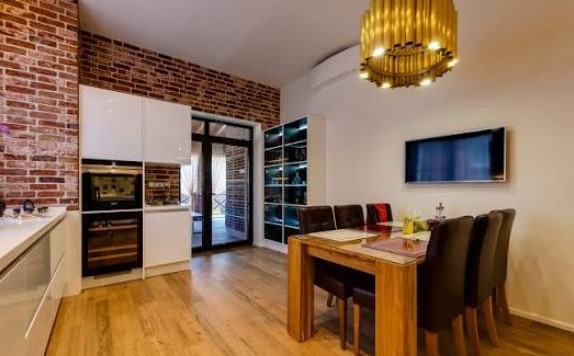
Some panels can imitate the appearance of wood, stone, or brick. Others come in simple glossy or matte finishes. Plastic panels are also resistant to moisture and grease, making them quite practical for everyday kitchen use.
Wooden Paneling
If you like a warm and natural atmosphere, wooden wall paneling can be a great choice. It works especially well with country, rustic, or Provence-style kitchens.
However, wood needs extra protection because kitchens can be humid and exposed to dirt. Applying suitable paint or lacquer can help improve its resistance to moisture and stains.
Decorative Plaster and Artificial Stone
For homeowners who want something more stylish, decorative plaster can create interesting textures and visual effects. It can imitate materials such as stone, silk, concrete, or aged surfaces.
Artificial stone is another attractive option, especially for backsplashes and countertops. It can provide a seamless appearance and is resistant to scratches, stains, moisture, and high temperatures.
So, Which One Should You Choose?
There is no single material that is perfect for every kitchen. If you want something affordable and easy to refresh, paint can work well. For areas that often get dirty, ceramic tiles or suitable wall panels are practical choices. If style is your priority, decorative plaster or artificial stone can give the kitchen a more premium appearance.
The key is to think about the location, cooking habits, maintenance, and overall kitchen design. A beautiful wall is great, but a beautiful wall that is also easy to clean and durable is even better.