
Tuesday, 30 June 2026
If you’ve ever looked at a brick wall and thought, “That doesn’t seem too difficult,” you’re only half right. Bricklaying is one of the oldest construction skills in the world, but doing it properly takes patience, practice, and attention to detail. The good news? Everyone starts somewhere, and learning the basics is easier than you might think.
The first thing to understand is that good brickwork starts long before the first brick is placed. Planning is everything. Measure the area carefully, calculate how many bricks you’ll need, and make sure your foundation is solid and level. Even the best bricklayer can’t build a straight wall on an uneven base. A stable foundation helps prevent cracks and structural problems later on.
Next comes the mortar—the “glue” that holds the bricks together. Mixing mortar isn’t complicated, but getting the right consistency matters. It should be thick enough to hold its shape while still being easy to spread. Mortar joints should also stay consistent in thickness because uneven joints can make a wall look messy and weaken its strength.
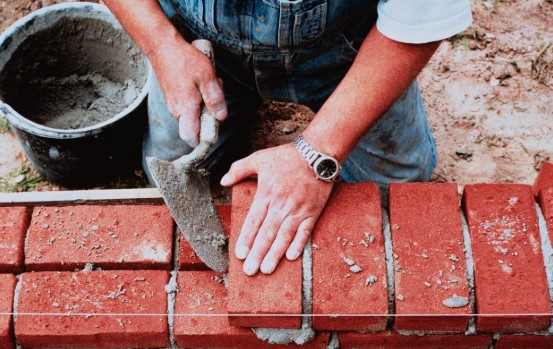
Once your mortar is ready, spread a layer onto the foundation using a brick trowel. Then place your first brick carefully, pressing it gently into the mortar. Add mortar to the end of the brick before placing the next one. Continue this process while keeping equal spacing between every brick.
One of the biggest secrets to professional-looking brickwork is checking your work constantly. Use a spirit level after laying every few bricks to make sure everything stays level. It’s much easier to fix a small mistake immediately than to discover a crooked wall after several rows have already been built.
Another important technique is staggering the bricks. Instead of stacking bricks directly on top of each other, each new row should overlap the joints below it. This pattern, often called a running bond or half bond, distributes weight more evenly and creates a stronger wall.
Weather also plays an important role. Avoid laying bricks during heavy rain or freezing temperatures because moisture and cold can prevent mortar from curing correctly. Dry, mild weather usually provides the best working conditions.
Don’t expect perfection on your first attempt. Most beginners start with small projects such as garden borders, planters, or simple decorative walls. These projects allow you to practice handling bricks, spreading mortar, and maintaining straight lines without the pressure of building a structural wall.
You’ll also need a few basic tools, including a brick trowel, spirit level, measuring tape, brick hammer, line and pins, and safety equipment like gloves and protective glasses.
Perhaps the most valuable tip is to slow down. Speed comes naturally with experience, but accuracy should always come first. A carefully built wall that takes a little longer is far better than a rushed project that needs to be rebuilt.
Bricklaying is a practical skill that rewards patience. Every brick you place teaches you something new, and with enough practice, you’ll soon be creating walls that are not only sturdy but also something you can proudly say you built yourself.