
Thursday, 16 July 2026
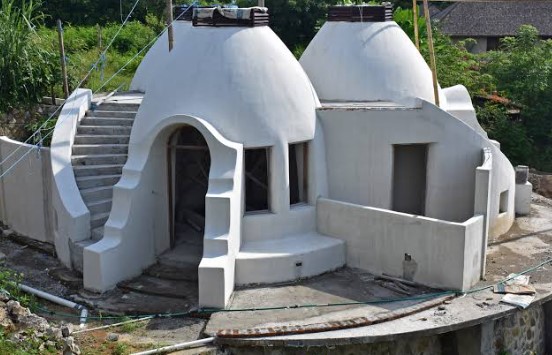
Lombok is no stranger to earthquakes. After the devastating earthquakes that struck the island in 2018, many communities began searching for stronger, safer, and more affordable ways to rebuild their homes. One of the most fascinating solutions can be found in Dome Lombok, where unique earthbag dome houses have become an example of how sustainable architecture can also improve disaster resilience.
These unusual dome-shaped buildings aren’t just visually interesting—they’re designed to withstand earthquakes while using simple, environmentally friendly materials.
What Is an Earthbag Dome?
An earthbag dome is built using long bags filled with soil, sand, or other locally available materials. The bags are stacked layer by layer in circular patterns to create a dome-shaped structure.
Between each layer, barbed wire is placed to improve grip and stability. Once completed, the walls are covered with plaster, creating a solid and durable home.
Because the materials are inexpensive and often sourced locally, earthbag construction can be much more affordable than conventional building methods.
Why Dome Shapes Work So Well
The dome design isn’t just beautiful—it also offers impressive structural strength. Unlike traditional square buildings that have weak corners, dome structures distribute forces evenly across the entire building. During an earthquake, seismic energy spreads throughout the curved walls instead of concentrating in one area.
This natural load distribution helps reduce structural damage and lowers the risk of collapse during strong ground movements.
Built for Earthquake-Prone Regions
Lombok sits in one of Indonesia’s most active seismic zones. That makes earthquake-resistant housing especially important.
Earthbag domes are designed to be flexible rather than rigid. Their thick walls, curved shape, and lightweight roof structure allow them to absorb and distribute seismic forces more effectively than many conventional buildings.
While no building can guarantee complete protection from every earthquake, this construction method has demonstrated strong performance in earthquake-prone regions around the world.
Sustainable and Eco-Friendly
Another major advantage of earthbag construction is sustainability.
Most of the building materials come directly from the local environment, reducing transportation costs and lowering carbon emissions. Earthbag homes also require less concrete and steel, two materials that typically produce significant greenhouse gas emissions during manufacturing.
Their thick walls naturally regulate indoor temperatures, keeping homes cooler during hot tropical days and reducing the need for air conditioning.
More Than Housing
Today, Dome Lombok is more than just an example of innovative housing. It has also become an ecotourism destination where visitors can learn about sustainable construction techniques.
Tourists interested in architecture, disaster recovery, and environmental design often visit the site to see how these unique homes are built. The project demonstrates that practical engineering can also become an educational attraction.
By combining tourism with community education, Dome Lombok inspires more people to think differently about sustainable housing.
Affordable for Local Communities
Cost is another important reason why earthbag homes attract attention. Because builders mainly use locally available soil and simple construction methods, overall costs can be lower than many conventional homes. Local workers can also be trained to build the structures without requiring highly specialized equipment.
This makes earthbag domes an attractive option for communities rebuilding after natural disasters or looking for affordable housing solutions.
The Earthbag Domes of Dome Lombok show that innovative architecture doesn’t have to be expensive or complicated. By combining locally sourced materials, sustainable design, and earthquake-resistant engineering, these homes offer a practical solution for life in disaster-prone regions.
As climate challenges and natural disasters become more common, projects like Dome Lombok remind us that resilient housing can also be environmentally friendly, affordable, and inspiring. They prove that with smart design and local resources, communities can build safer homes while protecting both people and the planet.