
Tuesday, 07 July 2026
One of the most common questions in any masonry project is simple: How much mortar do I actually need? Whether you’re building a garden wall, a house extension, or a commercial structure, using the right amount of mortar is essential. Too little can delay the project, while buying too much means unnecessary costs and wasted materials. Fortunately, estimating mortar doesn’t have to be complicated.
Start with the Number of Blocks
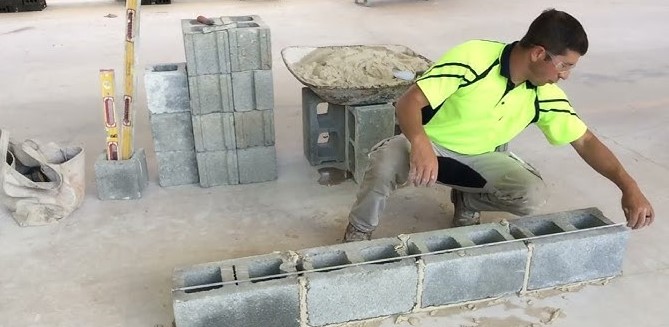
A simple rule of thumb used by many builders is that one wheelbarrow of mortar is generally enough for every 100 concrete blocks, assuming standard 10 mm mortar joints. This estimate works well for many general construction projects and provides a practical starting point before making more detailed calculations.
However, every project is different. The total amount of mortar depends on several important factors.
Factors That Affect Mortar Usage
The first factor is the size of the blocks. Larger blocks usually require different mortar volumes compared to smaller masonry unts.
Next is the joint thickness. Most construction projects use mortar joints around 10 mm thick. If the joints are thicker, you’ll naturally need more mortar.
The wall design also matters. Walls with many corners, openings, or decorative patterns often consume more mortar than simple straight walls.
Finally, workmanship can influence material usage. Experienced bricklayers usually waste less mortar than beginners.
How to Estimate Mortar More Accurately
A more precise calculation starts by measuring the length and height of your wall. Once you know the total wall area, you can determine how many blocks are required.
After calculating the number of blocks, estimate the mortar needed by considering the total joint area and multiplying it by the standard joint thickness. Many contractors also use online mortar calculators to simplify the process for larger projects.
Don’t Forget the Waste Factor
Construction projects rarely go exactly as planned. Some mortar will spill during mixing, some may dry before it’s used, and small adjustments are often necessary while laying blocks.
Because of this, professionals usually recommend ordering around 90% extra mortar beyond your calculated estimate. This small allowance helps prevent delays caused by running out of material in the middle of the job.
Check the Manufacturer’s Recommendations
Different blocks have different absorption rates and installation requirements. Some masonry products may recommend specific mortar mixes or joint sizes.
Before starting your project, it’s always a good idea to read the manufacturer’s installation guide. Following these recommendations can improve the wall’s strength, durability, and long-term performance.
Estimating mortar isn’t about finding one exact number. Instead, it’s about understanding your project’s dimensions, block size, joint thickness, and expected waste.
As a general guide, one wheelbarrow of mortar for every 100 blocks provides a useful starting point. From there, adjusting your estimate based on the project’s specific conditions will help ensure you buy the right amount of material.
Good planning not only saves money but also keeps your construction project running smoothly from the first block to the last.