
Wednesday, 08 July 2026
Having a small office doesn’t mean you have to sacrifice comfort, style, or productivity. In fact, limited space often encourages smarter design choices that make the workplace feel more organized and efficient. With the right planning, even a compact office can become a modern workspace that inspires creativity and collaboration.
The first thing to focus on is choosing multifunctional furniture. Desks with built-in storage, foldable tables, and cabinets that double as room dividers can help maximize every square meter. Instead of filling the office with large furniture pieces, select items that serve multiple purposes while maintaining a clean appearance.
Natural light also plays a huge role in making small offices feel bigger. Whenever possible, position workstations near windows to allow sunlight to brighten the room. Natural lighting not only creates a more spacious atmosphere but can also improve employee mood and productivity throughout the day.
Color selection is another important design element. Light colors such as white, beige, light gray, or soft pastel tones help reflect light and create an open feeling. These shades make walls appear farther apart, giving the illusion of a larger office. Adding small accents in darker colors can provide contrast without making the room feel crowded.
Storage should always be planned carefully in a compact office. Instead of using bulky filing cabinets, consider vertical shelving, wall-mounted storage, or floating cabinets. Utilizing wall space keeps the floor clear and helps maintain a tidy environment. Organized storage also reduces clutter, making it easier for employees to stay focused.
Modern offices increasingly embrace open layouts. Removing unnecessary partitions allows people to communicate more easily while creating a more spacious environment. If privacy is occasionally needed, movable dividers or glass partitions can provide flexibility without blocking natural light.
Technology also helps optimize small workspaces. Wireless devices, cloud-based systems, and cable management solutions eliminate unnecessary clutter around desks. Fewer visible cables create a cleaner and more professional appearance while improving safety in the workplace.
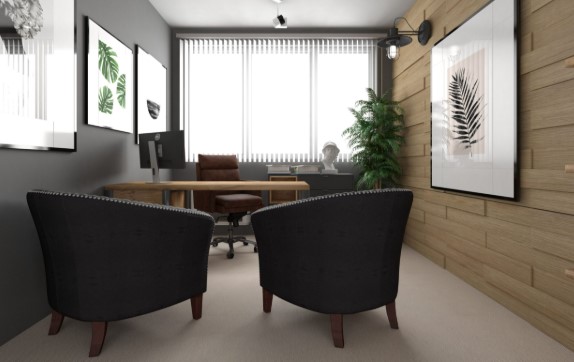
Adding plants is another simple but effective idea. Small indoor plants can improve air quality while bringing life into the office. Greenery creates a calming atmosphere and adds a natural touch that balances the modern design.
Comfort should never be overlooked. Ergonomic chairs and properly sized desks help employees maintain good posture during long working hours. Investing in comfortable furniture may seem costly at first, but it often leads to better productivity and employee satisfaction over time.
Decor should remain simple and intentional. Instead of filling walls with numerous decorations, choose a few pieces of artwork or motivational graphics that complement the office’s branding. Minimalist decoration prevents visual clutter while maintaining a professional atmosphere.
Finally, flexibility is key. As businesses grow, office needs often change. Modular furniture and adaptable layouts make it easier to rearrange the workspace without major renovations. This approach saves money while keeping the office functional for years to come.
A modern office isn’t defined by its size but by how efficiently the space is used. Through smart furniture choices, effective storage, good lighting, and minimalist design, even the smallest office can become a productive, welcoming, and stylish place to work.