
Thursday, 01 October 2026
When people look at a building, they usually notice the things that are easy to see. The design, paint, windows, floors, furniture, and overall appearance often become the main focus. But there is something much more important hidden behind those attractive details: the building’s structural strength.
A strong building does not happen simply because it looks modern or expensive. Several important factors work together to make sure a building can stand safely for many years.
One of the first things to consider is the soil. Every building transfers its weight to the ground, so the condition of the soil matters a lot. Strong and stable soil can provide better support for the foundation. On the other hand, weak or unstable soil can contribute to problems such as settlement, cracks, and structural movement.
This is why soil investigations are an important part of construction. Builders need to understand the characteristics of the land before deciding how the foundation should be designed. Rock, gravel, and dense sand generally have good load-bearing and drainage characteristics, while loose soil, peat, and some types of clay may require additional consideration.
The next major factor is the structural framework. In many modern buildings, reinforced cement concrete, or RCC, is an important part of this system. It combines concrete with steel reinforcement. Concrete is strong when dealing with compression, while steel helps provide tensile strength.
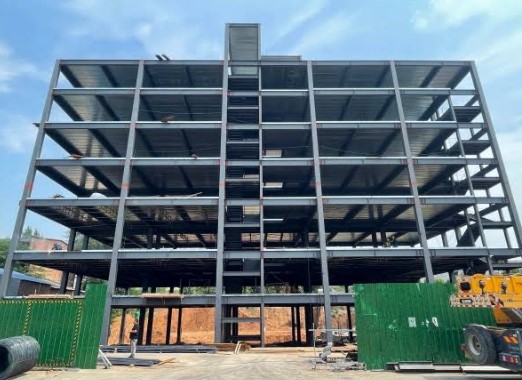
Think of the structure as a team. Slabs carry floor loads, beams transfer those loads, columns carry them downward, and foundations eventually transfer the loads into the ground. If these components are properly designed and connected, they can work together to keep the building stable.
Materials also make a big difference. Good-quality concrete, reinforcement steel, and other construction materials need to meet the requirements of the building. Using appropriate materials is only one part of the process, though. They also need to be installed and used correctly.
Another factor that should not be ignored is crack control. Small cracks may sometimes be related to normal movement or changes in materials, but uncontrolled cracking can affect durability and appearance. One technique mentioned by Bagai Buildcon is fibre mesh plastering, where mesh is placed within the plaster layer to help distribute stress and reduce surface cracking.
So, what actually makes a building structurally strong? It is not one single material or feature. Good soil, a properly designed structural framework, suitable materials, careful construction practices, and proper crack control all play a role.
In the end, a building can have beautiful interiors, but its real quality starts with what is underneath and behind the walls. A strong structure is the part that may not always be visible, but it is what helps a building remain safe, stable, and useful for years to come.