
Monday, 06 July 2026
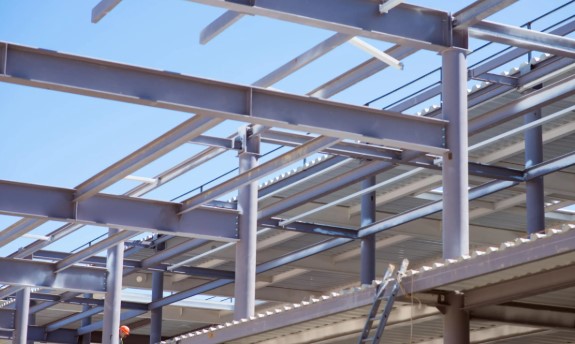
Steel beams are the backbone of modern construction. Whether it’s a skyscraper, warehouse, bridge, or residential building, steel beams help support heavy loads and keep structures strong and stable. Their durability, flexibility, and impressive strength make them one of the most important materials in the construction industry.
But not all steel beams are the same. Different projects require different beam designs depending on the weight they need to carry and the structure being built. Here are five common types of steel beams used in construction.
1.I-Beams
I-beams are among the most widely used steel beams in construction. As the name suggests, their cross-section looks like the letter “I.” This design allows them to provide excellent strength while using less material.
Because of their efficient strength-to-weight ratio, I-beams are commonly used in floors, bridges, and building frameworks. They can support significant loads without adding unnecessary weight to the structure.
2.H-Beams
At first glance, H-beams look similar to I-beams, but they have wider flanges and a thicker structure. This gives them greater load-bearing capacity and makes them ideal for large-scale projects.
H-beams are frequently used in high-rise buildings, industrial facilities, and heavy-duty construction projects where maximum strength is required. Their ability to handle large loads over long spans makes them a favorite among structural engineers.
3.C-Beams (Channels)
C-beams, also known as channel beams, have a cross-section shaped like the letter “C.” Their design allows them to be attached easily to walls, ceilings, and other structural elements.
These beams are often used in support frames, vehicle structures, wall systems, and secondary building supports. They provide good strength while remaining relatively lightweight.
4.T-Beams
T-beams feature a cross-section shaped like the letter “T.” They are commonly used in combination with concrete structures and are especially useful in supporting floor systems and bridge decks.
Because of their shape, T-beams can efficiently distribute loads in one primary direction. This makes them a practical choice for many infrastructure and commercial construction projects.
5.Angle Beams
Angle beams have an L-shaped profile and are known for their versatility. Although they are generally smaller than I-beams or H-beams, they play a critical role in reinforcement and structural bracing.
Builders often use angle beams for supporting lightweight structures, framing windows and doors, and strengthening steel frameworks. Their simple design makes them easy to install and adapt to different construction needs.
Choosing the Right Beam
Selecting the right steel beam depends on several factors, including load requirements, span length, project budget, and overall structural design. Using the wrong beam can lead to performance issues and increased costs.
That is why engineers carefully evaluate each project’s requirements before choosing a beam type. When selected correctly, steel beams provide exceptional strength, durability, and long-term reliability.
From massive skyscrapers to everyday buildings, these five types of steel beams continue to form the foundation of modern construction, proving that great structures always start with strong support.