
Friday, 03 July 2026
Wood has been used as a building material for centuries, but modern wood construction has come a long way. Thanks to new technology and engineered wood products, today’s wooden buildings are stronger, faster to build, and more efficient than ever before. From family homes to multi-story offices, wood construction systems are becoming an increasingly popular choice around the world.
One of the biggest advantages of wood construction is prefabrication. Instead of building everything on-site, many components are manufactured in factories under controlled conditions. Walls, floors, roofs, and even complete rooms can be produced before being transported to the construction site. This improves quality, reduces waste, and speeds up the entire building process.
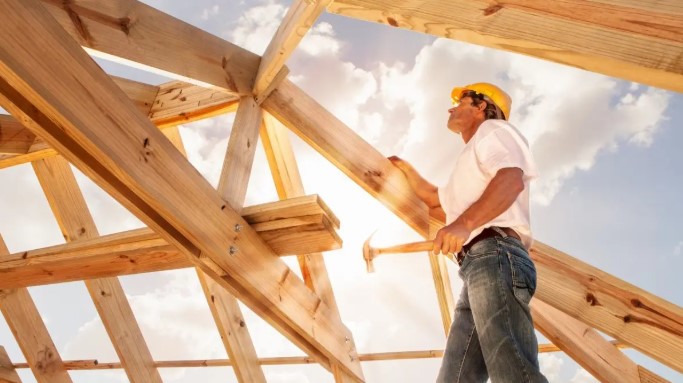
The first is the timber frame system, which remains one of the most widely used methods for houses. It consists of vertical wooden studs connected by horizontal plates, creating a lightweight but strong structural frame. Insulation is placed between the studs before the walls are finished. This system is relatively simple, cost-effective, and works well for residential construction.
Another popular option is the Cross-Laminated Timber (CLT) system. CLT panels are made by stacking layers of wood at right angles and bonding them together. The result is a large, solid panel with excellent strength and stability. CLT can be used for walls, floors, and roofs, making it suitable for larger buildings with longer spans. Many modern architects also like CLT because its natural wood appearance creates attractive interior spaces.
The surface unit system, also known as panel construction, takes prefabrication a step further. Complete wall and floor panels are assembled in the factory, sometimes including insulation, windows, and exterior cladding. At the construction site, cranes lift the panels into place, allowing buildings to be enclosed much faster than traditional construction methods.
The highest level of prefabrication is found in the modular system. Entire rooms or building sections are manufactured indoors, complete with electrical wiring, plumbing, and interior finishes. These modules are then transported to the site and connected together like building blocks. Because so much work is completed in the factory, construction time on-site can be dramatically reduced.
Another important structural approach is the post and beam system, which often uses glulam beams and columns. This system creates large open spaces with fewer interior walls, making it ideal for schools, sports halls, offices, and commercial buildings.
Although wood construction offers many advantages, careful planning remains essential. Designers must consider transportation limits, lifting equipment, moisture protection during construction, and proper installation. Since wood is sensitive to excessive moisture before the building is sealed, protecting the structure from rain is an important part of the construction process.
Modern wood construction proves that timber is no longer just a traditional material. With advanced engineering, prefabrication, and innovative building systems, wood can deliver durable, sustainable, and efficient buildings for a wide variety of projects.
As construction continues to focus on speed, quality, and environmental responsibility, wood construction systems are likely to play an even bigger role in shaping the buildings of the future.