
Saturday, 15 August 2026
When we talk about construction materials, people usually think about cement, steel, bricks, or concrete. But behind many strong and long-lasting structures, there are two simple materials that often do not get enough attention: sand and stone.
These two materials may look ordinary, but they have important jobs in construction. In fact, when used together with cement and water, sand and stone can create strong concrete that becomes the foundation of houses, buildings, roads, and many other structures.
Why Is Sand Important?
Sand is one of the most common materials used in construction. It is mainly used to make concrete, mortar, and asphalt. Its small particles act as fine aggregate and help bind other materials together.
When sand is mixed with cement and water, it helps create a workable mixture that can be shaped during construction. Once the concrete hardens, the combination provides the strength needed for a structure.
However, not all sand is exactly the same. Concrete sand is generally coarser and can be used in concrete mixtures, while masonry sand is finer and smoother, making it suitable for mortar and bricklaying. There is also fill sand, which can be used to fill low areas or create a stable base.
Choosing the right type of sand is important because different construction jobs require different characteristics.
What About Stone?
If sand helps create the fine part of a mixture, stone provides the larger aggregate that contributes to strength and durability.
Stone has been used in construction for centuries because of its toughness. It can be used in foundations, concrete, flooring, walls, landscaping, and even decorative applications.
There are also different types of stone for different purposes. Granite, for example, is known for its strength and resistance to wear, making it suitable for countertops and flooring. Limestone is often used for building facades and decoration, while slate is commonly used for roofing and flooring because of its durability and distinctive appearance.
Sand and Stone Work Better Together
The real magic happens when sand and stone are combined.
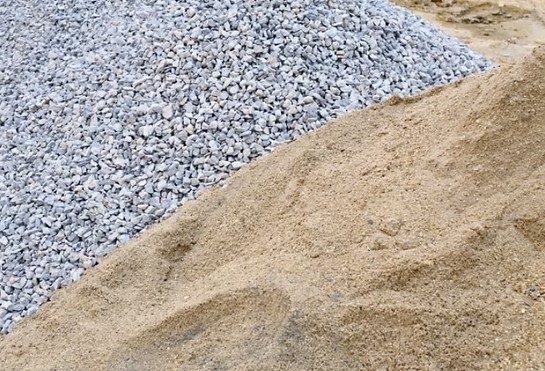
Think about a concrete foundation. Cement and water alone would not provide the same practical result. Sand fills smaller spaces between larger aggregate particles, while stone provides the bulk of the aggregate. Together, they create a more stable and durable mixture.
This combination can help concrete handle heavy loads and resist different environmental conditions. That is why sand and stone are such important parts of many construction projects.
Choosing Quality Materials Matters
Using sand and stone does not automatically guarantee a strong structure. The quality and suitability of the materials still matter. Builders need to consider the type, size, cleanliness, and intended use of the material before mixing or installing it.
For contractors and DIY builders, understanding these basics can make material selection much easier. Instead of simply buying whatever sand or stone is available, it is better to choose materials based on the project’s actual requirements.
In the end, sand and stone may seem like simple materials, but they play a huge role in construction. They work quietly behind the scenes, helping create concrete, foundations, roads, and buildings that are designed to last.