
Saturday, 15 August 2026
Drainage might not be the first thing people think about when talking about the food and beverage industry. Usually, the conversation is about ingredients, equipment, recipes, or production capacity. But behind a clean and efficient food processing facility, a good drainage system plays a very important role.
In food and beverage processing, water and other liquids are everywhere. Floors need to be washed regularly, production equipment needs cleaning, and spills can happen during daily operations. Without proper drainage, all that liquid can become a serious problem.
According to Plant Engineering, a well-designed drainage system can improve sanitary design and help make cleaning operations more efficient. Poor drainage, on the other hand, can contribute to standing water, sanitation problems, contamination risks, and production disruptions.
Choose the Right Type of Drain
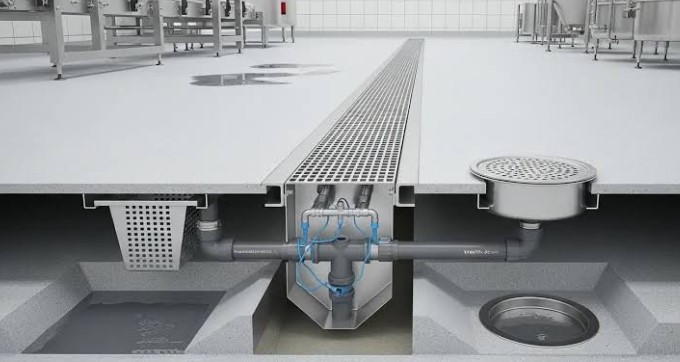
There is no single drainage system that works perfectly for every food processing facility. Common options include trench drains, slot drains, point drains, and area drains.
Trench drains are popular because they can collect large amounts of liquid across a channel. However, they often use heavy grates, which can make cleaning and maintenance more difficult.
Slot drains offer a slimmer alternative. Their rounded design is easier to clean, and some systems can even work with clean-in-place (CIP) systems. This can be particularly useful for facilities that need frequent and thorough cleaning.
Point or area drains collect liquid toward a specific location. They can work well in certain areas, although larger floors may require multiple drains.
Think About Drain Location
Drain placement is just as important as the drain itself. If drains are too far apart, water can remain on the floor. Standing water can create an environment where microorganisms can grow.
Plant Engineering highlights proper spacing as an important consideration and notes a general rule of one drain per 600 square feet of floor area. However, the actual design should depend on the facility, floor layout, water volume, and production process.
Pick Durable Materials
Food and beverage facilities need drainage materials that can handle demanding conditions. Food-grade stainless steel is recommended because it is resistant to rust and can withstand high temperatures and corrosive cleaning chemicals.
The goal is simple: choose a drainage system that stays hygienic, durable, and easy to maintain over time.
Don’t Forget the Floor
Even the best drain will not work properly if the floor is poorly designed. Floors need the right slope so water naturally flows toward the drain instead of collecting in low spots.
The floor should also meet the drain properly without creating edges where water can become trapped.
In short, choosing drainage for a food and beverage facility is about much more than simply giving wastewater somewhere to go. The right system supports sanitation, worker safety, easier cleaning, and smoother production. With proper planning from the beginning, a good drainage system can become one of the quiet but important foundations of a safe and efficient F&B facility.