
Wednesday, 29 July 2026
An underground drainage system is one of the most important parts of any construction project. Even though it’s hidden beneath the ground, it plays a huge role in protecting buildings from water damage, flooding, and soil erosion. Choosing the right type of pipe can save property owners from expensive repairs in the future.
So, what are the best pipes for underground drainage systems? Let’s take a look.
PVC Pipes
PVC (Polyvinyl Chloride) pipes remain the most popular choice for residential underground drainage systems. They’re lightweight, affordable, and easy to install, making them ideal for both small and large construction projects.
One of their biggest advantages is their excellent resistance to corrosion and chemicals. Unlike metal pipes, PVC won’t rust, even after years underground. Their smooth interior also helps wastewater flow efficiently, reducing the risk of blockages. Many PVC drainage systems can last between 50 and 100 years with proper installation.
HDPE Pipes
High-Density Polyethylene (HDPE) pipes are an excellent option for projects that require flexibility and durability.
These pipes can handle ground movement much better than rigid materials, making them suitable for areas with unstable soil or seismic activity. HDPE pipes are also joined using leak-resistant fusion methods, creating strong and reliable connections that minimize maintenance over time.
Concrete Pipes
Concrete pipes are commonly used in municipal drainage systems, highways, and stormwater infrastructure. Their exceptional strength allows them to support heavy traffic loads and transport large volumes of water.
However, concrete pipes are much heavier than plastic alternatives, requiring specialized equipment during installation. In certain wastewater environments, they may also experience chemical corrosion if not properly protected.
Cast Iron Pipes
Although less common in modern residential construction, cast iron pipes are still used in heavy-duty industrial applications.
They offer excellent durability and strength while also reducing noise from flowing water. The downside is their weight, higher cost, and potential for corrosion if protective coatings become damaged.
Corrugated Pipes
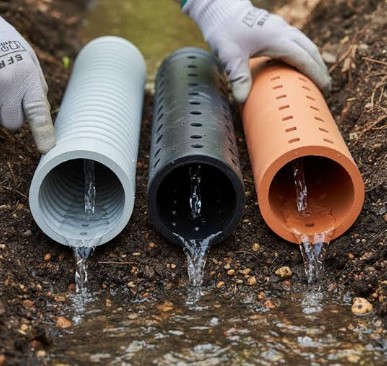
Corrugated pipes feature a ribbed exterior for structural strength and a smooth interior for efficient water flow. They’re widely used for stormwater drainage, agricultural fields, road drainage, and landscaping projects.
Because they’re lightweight and flexible, installation is usually quicker and more cost-effective compared to traditional concrete systems.
Which Pipe Should You Choose?
The best pipe depends on your project requirements. PVC is ideal for most residential and commercial drainage systems thanks to its affordability and durability.
HDPE works best in areas with ground movement or demanding industrial applications. Concrete is perfect for large-scale public infrastructure and stormwater systems. Cast iron suits specialized heavy-duty installations. Corrugated pipes are excellent for stormwater management and agricultural drainage.
Selecting the right underground drainage pipe is an investment in the long-term performance of any building or infrastructure project. While installation costs matter, durability, corrosion resistance, ease of maintenance, and expected service life should always be part of the decision-making process.
For most modern construction projects, PVC and HDPE pipes continue to lead the industry because they combine strength, longevity, cost efficiency, and reliable performance underground.